
Dr. Samuel M. Jordan Center for Persian Studies
University of California, Irvine
1 Humanities Gateway
Irvine, California 92697
Editorial
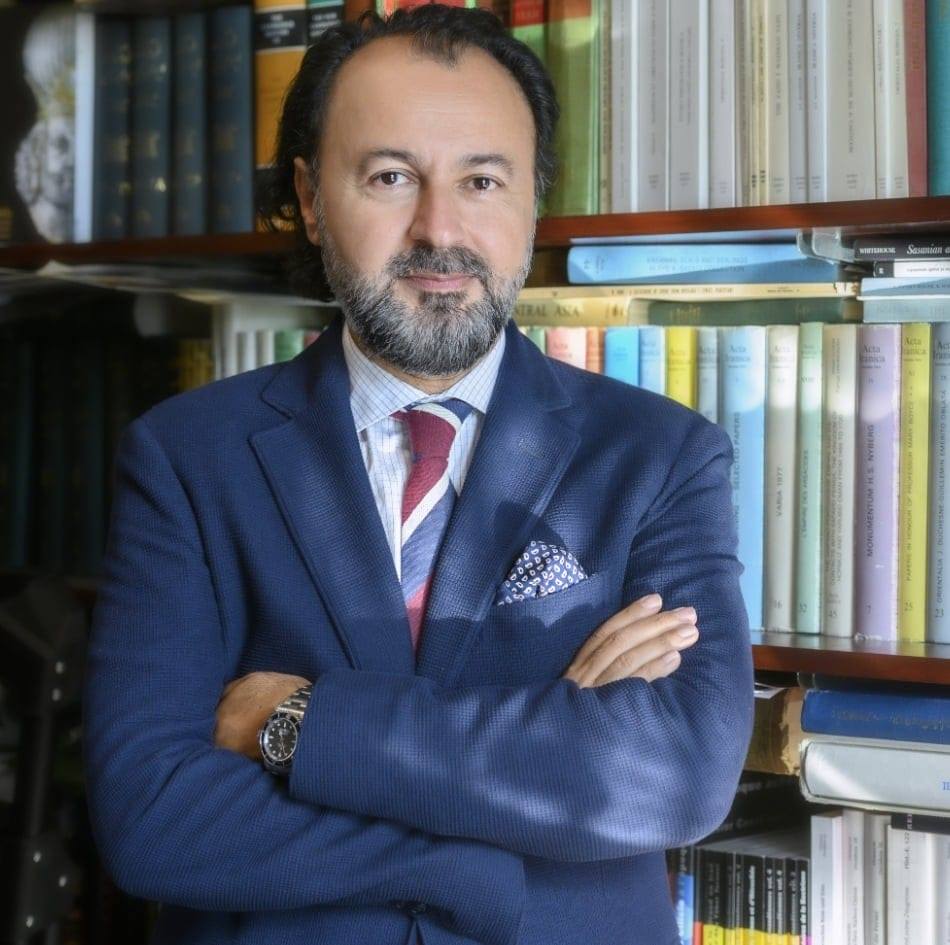
Professor Touraj Daryaee holds the Maseeh Chair in Persian Studies & Culture, Professor of History and is the Director of the Dr. Samuel M. Jordan Center for Persian Studies & Culture at the University of California, Irvine. He has authored and served as the editor of many scholarly works. Among them is Sasanian Persia: The Rise and Fall of an Empire (2009), winner of the BRISMES 2020 book award in the UK; The Oxford Handbook of Iranian History (2014) chosen as one of the top 25 academic books of the year by Choice magazine and described as “the best single volume on the history of the Iranian world.” Professor Daryaee has also translated several Middle Persian / Pahlavi texts into English, namely Šahrestānīha-ī Ērānšahr: A Middle Persian Text on Late Antique Geography, Epic, and History, with English and Persian Translations and Commentary (2002); On the Explanation of Chess and Backgammon (2016). He has also edited King of the Seven Climes A History of the Ancient Iranian World (3000 BCE – 651 CE) (2021).
He is the editor of DABIR: Digital Archives of Brief Notes and Iran Review with E.J. Brill-De Gruyter, of Sasanian Studies with Otto Harrassowitz, and of the web project Sasanika: Late Antique Near East Project at UC Irvine. Professor Daryaee has been a Professor of History at UC Irvine since 2007 and has been a visiting professor at the École pratique des Hautes Études en Sciences Sociales, Paris (2010); and the Bahari Senior Fellow, Oxford University (2014). In 2021 Professor Daryaee was elected to the European Academy of Sciences and Arts, in Salzburg, Austria whose members are leading scientists, artists, and practitioners who are dedicated to innovative research, interdisciplinary and transnational collaboration as well as the exchange and dissemination of knowledge. Academy members are elected for their outstanding achievements in science, arts, and governance.

Dr. Mateo Mohammad Farzaneh is Professor and Chair of the History Department at Northeastern Illinois University in Chicago. He is also the Chair of the Political Science Department and the Manager of the Cyrus of Persia Scholarship at the University’s Institutional Advancement where until recently he served as the Principal of the Mossadegh Initiative (the Mossadegh Servant Leaders Fund). In 2025, he was appointed to a three-year term to serve on the Committee on International Historical Activities at the American Historical Association. He served as the Chair of the Biennial Association for Iranian Studies Conference in 2018 held at University of California Irvine and has been an active scholar in the field of Iranian Studies since 2004.
Dr. Farzaneh is an historian of modern Iran and teaches the history of the Modern Middle East, the Islamic Civilization, Moorish Spain, Historiography and Historical Methods, and specialty courses on Iran. He is the author of two award winning books, first of which is about the Iranian Constitutional Revolution and other about the women and gender in the Iran-Iraq War. Currently, he is editing an anthology of the Iranian perspective on the Iran-Iraq War and is also co-authoring the history of Iranian women and gender in sports.
The Encyclopaedia Iranica Foundation appointed Dr. Farzaneh as the Managing Editor of the Encyclopaedia Iranica in March 2025 where he will oversee the encyclopaedia’s operation and strategy for future growth. He works and lives with his family in Chicago.

Dr. Layah Ziaii-Bigdeli is an art historian and Adjunct Lecturer at California State University, Long Beach. She also serves as the first Associate Editor of the Encyclopaedia Iranica under its new leadership. She holds a Ph.D. in Visual Studies from the University of California, Irvine, where she specialized in Ancient Iran and the premodern Persianate world. She earned an M.A. in Cultural Heritage and Preservation Studies, with an emphasis on Islamic art, from Rutgers University, and a B.A. in Art History and Archaeology, focusing on Ancient Near Eastern art, from Columbia University.
Dr. Ziaii-Bigdeli’s research focuses on the transcultural dynamics of late antiquity and the early Islamic period, with particular attention to the visual and material cultures of Iran and the Persianate world. She specializes in Sasanian and Islamic art and archaeology, numismatics, museum studies, and cultural heritage. Her forthcoming book, Beyond the Table: The Intersection of Material Culture and Elite Identity in Late Antique and Early Islamic Iran (3rd–10th Century CE), explores tableware and foodways as critical arenas for constructing elite identity. She is also the Content Manager of the Sasanika digital humanities initiative, where she leads a comprehensive overhaul of the project’s website, enhanced access to documents and primary sources, and streamlined the organization of materials for greater usability.
Dr. Ziaii-Bigdeli has extensive curatorial and museum experience. She has served as a Curatorial Fellow at the Philadelphia Museum of Art (2021), the Smithsonian National Museum of Asian Art (2019), and as a Curatorial Research Consultant for Islamic Art at the Doris Duke Foundation (2020). Earlier, she held research internships at The Metropolitan Museum of Art (2016–2017) and the Brooklyn Museum (2016). Her work has encompassed provenance research, cataloging, and exhibition support at leading U.S. institutions.
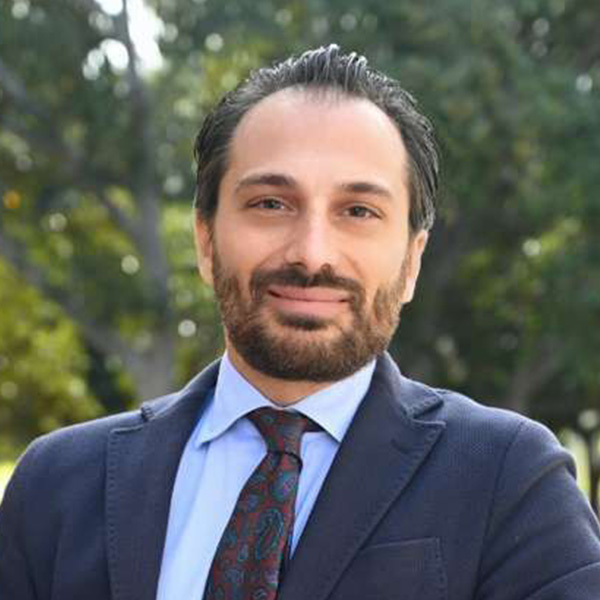
Dr. Arya Moknat is a scholar of political philosophy and international relations, specializing in modern political thought, comparative political theory, and international relations theory. He is an alumnus of the University of Tehran, where he earned his B.A. in Political Science; the Elliott School of International Affairs at The George Washington University, where he received a Master’s in International Policy and Practice (MIPP); and Claremont Graduate University, where he completed his Ph.D. in Political Science and Philosophy. His doctoral dissertation, “Hume, Nietzsche, and the Irrational Roots of the Political,” examined the ways in which irrational forces shape human nature and political order.
Dr. Moknat currently serves as Operations Manager for the Encyclopædia Iranica, housed at the Samuel M. Jordan Center for Persian Studies, University of California, Irvine. He previously worked as Program Manager of the Persian Center and the Center for Knowledge, Society, and Technology (CKTS) at UCI. He has been a Visiting Assistant Professor at Santiago Canyon College, teaching courses in political theory and international relations. He also taught Modern Iran as an Adjunct Professor at the University of California, Irvine (2020–2021), and led the seminar Nietzsche and Politics as a Visiting Assistant Professor at Pitzer College (2018–2019). Some of Dr. Moknat’s publications include Nietzsche, Hume, and the Irrational Roots of the Political (Tehran: Ghasidesara, 2023) and“Hannah Arendt and the Possibility of Change in International Relations” (Research in Theoretical Policy, 2021), which he coauthored.
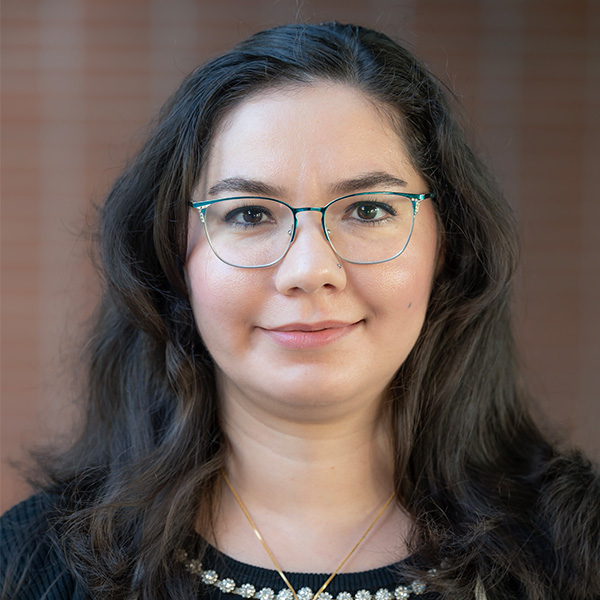
Negin is a multilingual educator with a strong background in Comparative Literature, specializing in contemporary Persian and Arabic literature. With two master’s degrees—an M.A. in Comparative Literature from the University of California, Davis (2023) and an M.A. in Persian Language and Literature from Shiraz University (2015), she has always been intrigued by Persian literature.
Throughout her academic career, Negin published peer-reviewed articles, has served as a Teacher Assistant at the University of California, Davis, for two years in the Humanities Department, lecturer, and Persian editor in Iran. Her educational philosophy is rooted in fostering critical thinking and a genuine love for literature.
Negin’s research has explored areas such as contemporary Persian literature and translation, culminating in M.A. thesis on the translation of a Persian novel, Ro’aye Tabbat (The Dream of Tibet). She is an award-winning scholar, having received a FLAS scholarship for Arabic language at the University of Wisconsin-Madison (2022) and a Hand and Lift scholarship (2021). Negin was also recognized as the top-ranked student in the master’s program at Shiraz University. Proficient in English, Persian (Farsi and Dari), and intermediate Arabic, she is committed to leveraging her academic expertise and diverse professional background to empower others and positively contribute to institutions.

Amir Hosein Pourjavady earned his first Ph.D. in Near Eastern Languages and Cultures from UCLA and his second Ph.D. in Ethnomusicology from the CUNY Graduate Center. He has taught at both the University of Tehran and UCLA for several years. Dr. Pourjavady’s scholarship includes editions of several musical treatises, numerous articles, encyclopedia entries, book reviews, and CDs. His previous projects have produced significant results, notably his acclaimed book Music-Making in Iran from the Fifteenth to the Early Twentieth Century (Edinburgh University Press, 2024), as well as his forthcoming publication Music in the Safavid Era (1501–1736) (Brill, 2026). In addition to his academic achievements, Dr. Pourjavady is an accomplished Persian setār player and has performed extensively with renowned Iranian musicians.

Dr. Razieh Taasob is a numismatist and archaeologist specializing in the coinages of pre-Islamic Iran and Central Asia. She earned her Ph.D. in Numismatics from the University of Vienna and has held academic appointments at Princeton University, the University of Freiburg in Germany, and Charles University in Prague. At Princeton University, she curated, studied, analyzed and digitized pre-modern Iranian and Central Asian coin collections and organized both an exhibition and an international conference on Sasanian coinage and history. At the University of Freiburg, she served as a postdoctoral researcher funded by the European Research Council (ERC) within the interdisciplinary project Beyond the Silk Road: Economic and Cultural Interactions between Empires (BaSaR), focusing on the economic and political networks of the Arsacid Empire and contributing chapters on Arsacid economic practices within imperial and cross-regional contexts. In fulfillment of the International Mobility of Researchers program at Charles University, she conducted research on Heraios Coinage in the Context of the Numismatic Tradition of Central Asia, lectured on numismatic methodologies and cultural exchange, and contributed to collaborative research initiatives.
Earlier, she contributed to UNESCO’s Silk Roads World Heritage Nomination project at the Research Institute of Cultural Heritage and Tourism of Iran and excavated extensively in Iran and Uzbekistan. Dr. Taasob has published widely on the numismatics of the Indo-Iranian borderlands, focusing on coin typology and iconography, linguistic and religious representations, economic practices, and the dynamics of cross-cultural exchange in the Arsacid and Kushan
worlds.

Mark K. Gradoni is a doctoral candidate in the Department of History at the University of California, Irvine, and a member of the graduate specialization in Ancient Iran and the Premodern Persianate World. An interdisciplinary scholar of the Near East and Central Asia in Late Antiquity (c. 200-800 CE) focusing particularly upon Sasanian Ērān-šahr, his research integrates archaeological, art historical, and historical methodologies, applying them to socioeconomic and environmental histories of the ancient Iranian world. His intellectual interests include ancient economies, labor, microhistories, numismatics, environmental and agrarian histories, archaeological landscapes, and dynamics of control and popular resistance. Mark’s dissertation, “Husbandmen and Farmers, Managers and Scribes: Portraits of Daily Lives, Economies, and Environments in the Iranian World at the end of Antiquity,” explores the intersections of landscape, labor, and environment drawing from Middle Iranian documents, archaeological investigations, and archaeoclimatic reconstructions.
Mark holds an M.A. in History from UCI in addition to an M.A. in the Humanities from Hood College, where he studied the art history and archaeology of the ancient Near East. Additionally, he earned a pair of B.A.s in Ancient Studies and History from the University of Maryland, Baltimore County. He is trained as a field archaeologist and numismatist and has conducted fieldwork as part of various projects in the eastern United States, Romania, and Jordan. He annually conducts fieldwork in Kurdistan at the site of Yasin Tepe as an affiliate of the Italian Archaeological Mission to Iraqi Kurdistan (MAIKI). In 2023, he represented UCI at the American Numismatic Society’s Eric P. Newman Graduate Seminar in Numismatics.
Mark has published on Sasanian numismatics and economic history, dynastic mechanisms in the late Roman world, and contemporary labor. He is the founding organizer of “New Horizons in Premodern Iranian Studies,” a biennial conference highlighting new research by early career scholars.

Simin Amini is a doctoral student and an Elahé Omidyar Mir-Djalali Graduate Fellow in Ancient Iranian Studies at Art History/Visual Studies at UCI. Amini earned her MA from University of London’s SOAS, where she wrote her thesis on ancient Iranian apotropaic amulets and Zoroastrian demonology. Simin has worked at the British Museum on their collections of related material amulets and metalwork. Her research is an extensive investigation on the magical practice and visuality and materiality of evil in the ancient Iranian world.
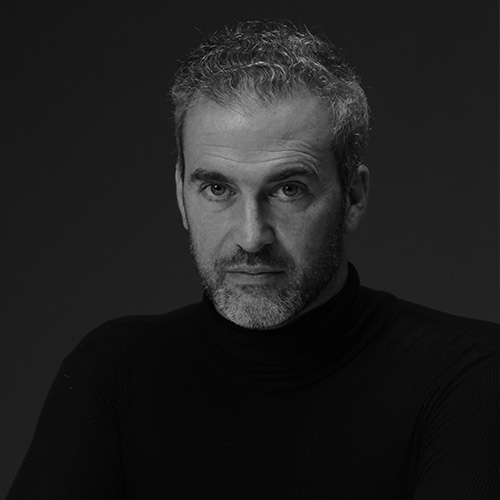
Philip Grant is a Persian-English translator, anthropologist and historian. His publications include a translation of Javad Tabatabai’s Ibn Khaldun and the Social Sciences: Discourse on the Conditions of Im-possibility (Polity, 2024); a co-authored sociological investigation of investment management, Chains of Finance (Oxford, 2017) that emerged from his postdoctoral position in the Social Studies of Finance at the University of Edinburgh; and articles on the Zanj Rebellion against the Abbasid Caliphate in Iraq and Iran (ninth century CE). His 2012 PhD dissertation in Socio-Cultural Anthropology from the University of California, Irvine, explored the epistemology and ethics of ethnographic collaboration with Iranian-American women’s activists. He has also worked as a philosophical consultant to technology companies and an equity fund manager. He currently teaches anthropology (biological, cultural, and linguistic) at the University of La Verne, California, and is an Associate Scholar of the Center for Persian Studies at UC Irvine.

Dr. Khodadad Rezakhani is a historian of global late antiquity and Middle Ages, specializing in economic and social history of Iran and Central Asia. He is currently the Principle Investigator of the Gerda Henkel Stiftung funded project, A City of Many Cities: Ctesiphon and Baghdad at Leiden University, Netherlands. He is the author of ReOrienting the Sasanians: East Iran in Late Antiquity (Edinburgh University Press, 2017) and the co-editor, along with John Hyland, of the Brill’s Companion to War in Ancient Iranian Dynasties (Brill, 2024). He is presently also the Assistant Editor of Ancient History for the Journal of Iranian Studies. He previously taught at Princeton University, Freie Universität Berlin, and London School of Economics. Besides late antique history, he also works on ancient numismatics and occasionally Qajar history, and considers geography as an inseparable part of the study of history. He currently lives in Leiden, Netherlands.

Melissa DePierro is a Ph.D. student in Visual Studies at the University of California, Irvine, where she studies under Dr. Matthew Canepa. She is the recipient of the Elahé Omidyar Mir-Djalali Doctoral Fellowship in Ancient Iranian Art History and Archaeology. Currently, she serves as the student representative for the Department of Visual Studies. Her research examines the roles of animals in antiquity, with a focus on their presence and agency in military, domestic, elite, religious, and scientific contexts across the ancient Mediterranean and Near East. Her work highlights how animals shaped ancient worldviews, social life, and built environments, from war elephants and mythological hybrids to household animals. Through an interdisciplinary approach, her research challenges anthropocentric narratives and repositions animals as central actors in the ancient world.
Melissa holds an M.A. in Art History from the University of Georgia, where she completed her thesis “Business, Leisure, and Piety: Animal Motifs in the Floor Mosaics at the Villa of Piazza Armerina,” and a B.A. in Art History and classical archaeology from the University of North Carolina at Chapel Hill. She has participated in excavations in Israel and Kurdistan. She has held research and teaching roles at the Getty Research Institute, UC Irvine, the University of Georgia, the Georgia Museum of Art, and the North Carolina Museum of Art.

Amirali Ardekanian is a doctoral student and Elahé Omidyar Mir-Djalali Doctoral Fellow in Art History and Archaeology of Ancient Iran in the Visual Studies program at the University of California, Irvine, where he also earned his M.A. in Visual Studies. Drawn from archival and visual sources, his research examines the reception of the ancient world in 19th- and early 20th-century Iran, focusing on how photography, national identity, museology, and cultural history intersected in shaping modern Iranian visual culture.
His broader interests include the history of photography and picture postcards, vernacular art and architecture of Qajar Iran, and the cultural significance of Iran’s early music recording industry.
He has presented his research internationally, including at the Getty Research Institute, the University of Strasbourg, and the University of Wisconsin–Madison, and has delivered invited lectures for the Ghubār Circle for Islamic Art Studies and the Nimruz Institute for Iranian Studies. His curatorial and archival experience includes managing the archives of the Samuel M. Jordan Center for Persian Studies and Culture at UC Irvine and working with the Music Museum of Tehran.
In addition to his scholarly work, he has published extensively in Persian on Iranian music history and visual culture in journals such as Māhoor, Hāfez-Pazhuhi, and Farāhang. He is also co-author of forthcoming books, including Tehran: In the Road of Modernism and The Tasnifs of the Early Pahlavi Period.
Field Editors

Samra Azarnouche is an expert on pre-Islamic Iran’s religion, Zoroastrianism, including textual sources and scriptural tradition, religious mythology, and the political and social history of late antiquity. Her early work on the religious tradition of Sasanian Iran (3rd-7th century CE) uncovered institutional norms and paradigms in the modes of transmission of sacred knowledge, which are among the signs of the planned institutionalization of a highly hierarchical Zoroastrian clergy. Through the study of a religious corpus still imperfectly accessible, written in Middle Persian (Pahlavi), and directly dependent on the Avesta, she also focuses on the literary, legal, scientific corpus which that the Magi in late antiquity have developed before and after Islam. Since 2017, her work has focused on the important Zoroastrian compendium, the Dēnkard IV, still unpublished, is the project of her next monograph. This Middle Persian text emphasizes three issues: The political theology of the Sasanian dynasty (from the 6th century), religion and science, and the Zoroastrian king as the universal patron of knowledge. As a follow-up to this work on the Dēnkard, it has Professor Azarnouche to explore the influence of neoplatonism on Zoroastrianism or the development of a religious doctrine centered on ontogeny and embryology, which reveal, among other things, the diversity of scientific transfers (Greek and Indian) to Late Antique Iran.

Carlo G. Cereti, joined the University of California as Endowed Ferdowsi Chair in Zoroastrian Studies and Prof. of Classics and Religions in 2024, having served since 2000 as Full Professor of Iranian Studies at Sapienza University of Rome, Dept. of Ancient World Studies, from 2009 to 2017 he acted as Cultural Counsellor at the Embassy of Italy in Tehran. His earliest research work focused on the history of the Zoroastrian Parsi community in India, an intellectual interest that continued throughout his academic career, though in time his main research field shifted to Middle Iranian Languages and Literatures and more specifically to the study of Zoroastrian literature in Middle Persian. His interest in the medieval and modern history of the Zoroastrian community, combined with an intimate knowledge of Zoroastrian Middle Persian literature and more of Sasanian and post-Sasanian written culture led him to preparing critical editions of Middle Persian texts such as the Zand ī Wahman Yasn and many chapters of the Bundahišn, as well as a work of synthesis on the Pahlavi tradition (La Letteratura Pahlavi) From 2006 onwards he has intensively worked on epigraphic Middle Persian, with a focus on Narseh’s Paikuli inscription and on other epigraphic texts, including seals and sealings as well as ostraca and documents mainly dating to the late Sasanian and early Islamic periods. He is the head of the Paikuli Project in the KRG region of Iraq and of the newly created Kuwait Bay Project in Kuwait. He also acts as senior adviser to the Kermanshah Sasanian Landscape Project in Iran. He has published four books and more than one hundred and fifty articles. He is the General Editor of Sēnmurw. Journal of Iranian Studies and has edited more than a dozen volumes. In the past he has contributed to the following international projects: “Thesaurus Indogermanischer Text- und Sprachmaterialien (TITUS)”, a database collecting documents in various Indo-european languages (University of Frankfurt), Iranisches Personennamenbuch (ÖAW) and Sylloge Nummorum Sasanidorum, (ÖAW / CNRS / IsIAO). Main research interests: Middle Iranian Languages, Zoroastrianism, Iranian Religions, Epigraphy, Glyptics, Late antique – early medieval history of Iran and surrounding countries
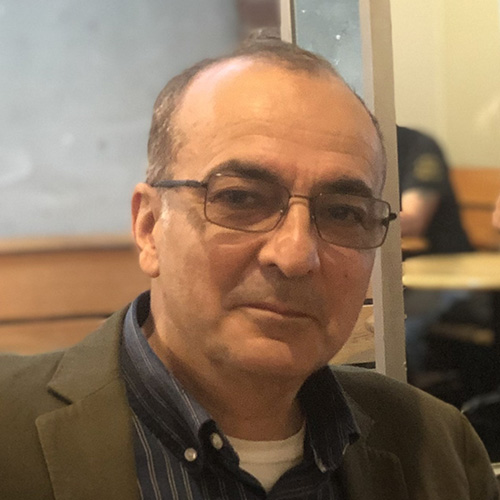
Habib Borjian is a philologist specializing in historical linguistics, dialectology, Persian mythology, and the history of Inner Asia. His academic training in the humanities spans Columbia University, the University of Tehran, and Yerevan State University.
Dr. Borjian is currently a visiting scholar at Rutgers, the State University of New Jersey. He was a research scholar at Columbia University’s Center for Iranian Studies from 2010 to 2019, during which he served on the editorial board of the Encyclopaedia Iranica. He is a member of the board of directors of the Endangered Language Alliance, dedicated to documenting rare languages spoken by immigrant communities in Greater New York. Additionally, he has served as Co-Director for the Near East region at the Endangered Languages Project, a joint initiative of Google and the University of Hawai‘i, where his work involved identifying and categorizing the languages of Afghanistan, Pakistan, Central Asia, the Caucasus, Turkey, and Iran.
His scholarly output includes a dozen books, numerous papers in peer-reviewed journals and edited volumes, and over a hundred encyclopedia entries. He has documented and published on nearly all Iranian language families, including Central Plateau, Caspian, Gorgāni, Semnāni, Tatic, Caucasian Tat, Kurdish, Lori, the Fars group, Lārestāni, the Southeastern group, Balochi, Pamiri, Ossetic, and Tajik dialects. His research has introduced new terminology, including Garmsiri, Biabanaki, Komisenian, Tabaroid and Perso-Tabaric, which have gained recognition in the field.


Laetitia Nanquette is Associate Professor at the University of New South Wales, Sydney. She holds a PhD from the School of Oriental and African Studies, University of London. She was trained in France (Sorbonne University, INALCO), the United Kingdom (SOAS), Iran (Universities of Tehran and Isfahan) and the United States (Fulbright visiting scholar at Harvard University), before moving to Australia. She is the author of the award-winning books Orientalism versus Occidentalism: Literary and Cultural Imaging Between France and Iran since the Islamic Revolution (I.B. Tauris/Bloomsbury 2013), and Iranian Literature after the Islamic Revolution. Production and Circulation in Iran and the World (Edinburgh University Press, 2021). She is Associate Editor (Modern Persian Literature) for Iranian studies and for Abstracta Iranica. She works on modern and contemporary Persian literature and is currently writing a book on the history of publishing in Iran from the 1950s until today. She lives with her family in Sydney.
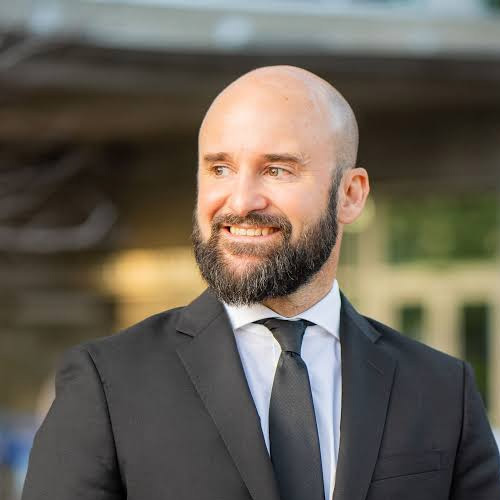
Matthew P. Canepa is Professor of Art History and Elahé Omidyar Mir-Djalali Presidential Chair in Art History and Archaeology of Ancient Iran at University of California, Irvine. An historian of art, archaeology and religions his research focuses on the intersection of art, ritual and power in the eastern Mediterranean, Persia and the wider Iranian world. Professor Canepa’s research interests center on the co-constituency of the built, ritual, and natural environments in creating and sustaining cultural memory, power, and identity. His most recent book is entitled The Iranian Expanse: Transforming Royal Identity through Landscape, Architecture, and the Built Environment 550 BCE – 642 CE (University of California Press, 2018; paperback ed. 2020). It is a large-scale study of the transformation of Iranian cosmologies, landscapes and architecture from the height of the Achaemenids to the coming of Islam. His publications include The Two Eyes of the Earth: Art and Ritual of Kingship between Rome and Sasanian Iran (University of California Press, 2009; paperback ed. 2017), the first book to analyze the artistic, ritual and ideological interactions between the late Roman and Sasanian empires in a comprehensive and theoretically rigorous manner. His recent work focuses on the impact of Iranian visual and spatial cultures on the Afro-Eurasian world; a re-examination of Parthian silver and aristocratic culture; the problem of time and memory in Perso-Iranian cultures. He is the Director of UCI’s Graduate Specialization in Ancient Iran and the Premodern Persianate World.

Talinn Grigor’s research focuses on 18th- to 20th-century architectural and art histories through postcolonial, race, feminist, and critical theories grounded in Iran, Armeno-Iran, Armenia, and Parsi India. Her books include the winner of the Saidi-Sirjani Book Award, The Persian Revival (2021), Contemporary Iranian Art (2014), Building Iran (2009), and Persian Kingship and Architecture (2015) coedited with Sussan Babaie. Grigor has received fellowships from the National Gallery of Art, Getty Research Institute, Cornell’s Humanities Center, Princeton’s Persian Center, MIT’s Aga Khan Program, SSRC, and Persian Heritage and Gulbenkian foundations. Her last book is coauthored with Houri Berberian, The Armenian Woman, Minoritarian Agency, and the Making of Iranian Modernity, 1860–1979 (Stanford University Press, 2025).

Layla S. Diba is an independent art advisor, scholar and curator specializing in the art of 19th and 20th century Iran. She has been the Director and Chief Curator of the Negarestan Museum of 18th and 19th century Iranian Art in Tehran from 1975-78 and the Brooklyn Museum of Art’s Curator of Islamic Art from 1990-2000 where she organized the groundbreaking exhibition Royal Persian Paintings: The Qajar Epoch (1785-1925) and edited and co-authored the accompanying publication. In 2013 she co-curated the exhibition Iran Modern at Asia Society Museum in New York and co-edited the accompanying catalogue. She has written widely on Persian and Islamic Art and currently serves on the Visiting Committee of the Department of Islamic Art, Metropolitan Museum of Art and on the Board of the Soudavar Memorial Foundation.
Amir Hosein Pourjavady earned his first Ph.D. in Near Eastern Languages and Cultures from UCLA and his second Ph.D. in Ethnomusicology from the CUNY Graduate Center. He has taught at both the University of Tehran and UCLA for several years. Dr. Pourjavady’s scholarship includes editions of several musical treatises, numerous articles, encyclopedia entries, book reviews, and CDs. His previous projects have produced significant results, notably his acclaimed book Music-Making in Iran from the Fifteenth to the Early Twentieth Century (Edinburgh University Press, 2024), as well as his forthcoming publication Music in the Safavid Era (1501–1736) (Brill, 2026). In addition to his academic achievements, Dr. Pourjavady is an accomplished Persian setār player and has performed extensively with renowned Iranian musicians.
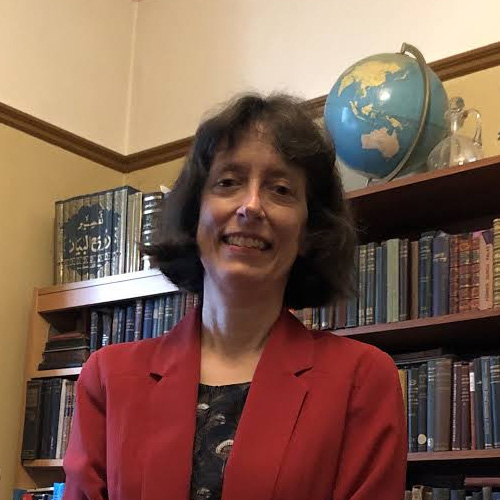
Sholeh Quinn is Professor of History at the University of California, Merced in the Department of History & Critical Race and Ethnic Studies. Her research focuses on the history of early modern Iran and Persian historiography. She is the author of Historical Writing during the Reign of Shah ‘Abbas: Ideology, Imitation, and Legitimacy in Safavid Chronicles (2000), Shah Abbas: the King Who Refashioned Iran (2015). Her most recent book is Persian Historiography across Empire: the Ottomans, Safavids, and Mughals (Cambridge University Press, 2021).

Charles Melville holds a BA 1st-class Hons. in Oriental Studies (Arabic & Persian, University of Cambridge, 1972), MA in Islamic History (LSOAS, 1973) and PhD in Oriental Studies (University of Cambridge, 1978), on the History of Persian Earthquakes. He is Professor Emeritus of Persian History at the University of Cambridge and a Fellow of Pembroke College. He has been a long-serving member of the Governing Council of the British Institute of Persian Studies and was its President 2017-23. He is Director of the Shahnama Project (since 1999) and was President of The Islamic Manuscript Association (2006–2019), both based in Cambridge. His main scholarly interests are in the history and historiography of medieval and early modern Iran and he has published extensively on the history and culture of Iran in the Mongol to Safavid periods (13th to 17th centuries), on the illustration of Persian manuscripts and on the epic Shahnama of Firdausi. Recent publications include several edited volumes, such as Persian Historiography, volume X of the History of Persian Literature (London, 2012); The Mongols’ Middle East. Continuity and transformation in Ilkhanid Iran (Leiden, 2016) [with Bruno de Nicola]; Shahnama Studies III (Leiden, 2018) [with Gabrielle van den Berg]; The contest for rule in eighteenth-century Iran. The Idea of Iran, volume XI (London: IB Tauris, 2022); and a chapter on ‘Persian Sources’ in the Cambridge History of the Mongol Empire (2023). He has just completed a Leverhulme Trust Emeritus Fellowship on the ‘Visualisation of Persian History’. Prof. Melville he has travelled widely in Iran (before and after the Islamic Revolution) and parts of Central Asia.

Mohamad Tavakoli-Targhi, the Inaugural Director of the Elahé Omidyar Mir-Djalali Institute of Iranian Studies, is Professor of Historical Studies, History, and Near and Middle Eastern Civilizations at the University of Toronto. He was the founding Chair of the Department of Historical Studies at the University of Toronto- Mississauga (2004-07) and has served as President of the International Society for Iranian Studies (2008-10). In addition to serving as Editor-in-Chief of Comparative Studies of South Asia, Africa and the Middle East (2001-2012), a Duke University Press journal, he was the Editor of Iran Nameh (2011-2015). Currently, he is the Editor-in-Chief of Iran Namag, Cinema Iranica, Women Poets Iranica, and the co-editor of the Iranian Studies book series published by Routledge. Tavakoli is the author of Refashioning Iran: Orientalism, Occidentalism and Historiography
(Palgrave, 2001) and Tajaddud-i Bumi [Vernacular Modernity] (Nashr-i Tarikh, 2003). Together with providing critical introductions in Persian, he has edited the volumes Civilizational Wisdom: Selected Works of Ehsan Yarshater (Toronto: Iran Namaeh Books, 2015); Jahangir Amuzgar: Selected Economic Essays (Toronto: Iran Nameh Books, 2015); and Ayin-i Danishjuyan: The First University of Tehran Student Journal (Toronto: Iran Nameh Books, 2016). Tavakoli has published numerous historiographical articles in English and Persian on Iranian modernity, matriarchal nationalism, biopolitics, rights governmentality, and clerico engineering. Tavakoli is the recipient of two Outstanding Teacher awards from Illinois State University (1996 and 2001) and has held visiting fellowships at St. Antony’s College, Oxford University (1998), the Center for Historical Studies, Jawaharlal Nehru University (New Delhi, 1992–93); and Harvard University (1991–92). He holds a BA in Political Science, an MA in History from the University of Iowa, and a Ph.D. in History from the University of Chicago.

Robert Rollinger is Professor of Ancient History and Ancient Near Eastern Studies at the Leopold-Franzens University of Innsbruck. His main research areas are the history of the Ancient Near East and the Achaemenid Empire, contacts between the Aegean World and the Ancient Near East, ancient historiography, and the comparative history of empires. Recent publications include: Short-term Empires in World History (coedited; 2020); A Companion to the Achaemenid Persian Empire, 2 volumes(Blackwell Companions to the Ancient World) (coedited; 2021); Empires to be Remembered (Studies in Universal and Cultural History) (coedited; 2022); The End of Empires (Studies in Universal and Cultural History) (coedited; 2022); Making Peace in the Ancient World (Melammu Workshops and Monographs 5) (coedited; 2022); The World of Arrian in Perspective (Classica et Orientalia 30) (coedited; 2022); „Krisen“ und „Untergänge“ als historisches Phänomen (coedited; 2023), Iran and the Transformation of Ancient Near Eastern History: The Seleucids (ca. 312-150 BCE) (Classica et Orientalia 31) (coedited; 2023); Deciphering Assyria. A Tribute to Simo Parpola on the Occasion of his 80th Birthday (Melammu Workshops and Monographs 9)(coedited; 2023); Ancient Worlds in Perspective: Contextualizing Herodotus (Philippika 150) (coedited; 2024)
First Editorial Board

Ehsan Yarshater
Founding Editor (1920-2018)
Professor Ehsan Yarshater was the Hagop Kevorkian Professor Emeritus of Iranian Studies at Columbia University and Director of its Center for Iranian Studies. He authored and served as the editor of numerous scholarly works. Among many notable works, he authored Persian Poetry in the Second Half of the 15th Century (1953), Southern Tati Dialects (1970), and edited the third volume of Cambridge History of Iran, in two parts, covering the Seleucid, Parthian and Sasanian periods (1983, 1986), and Persian Literature (1988). He was the General Editor of the 40-volume Tabari Translation Project, and the Founding Editor of the Persian Text Series, the Persian Heritage Series and the Persian Studies Series. Lecture series in his name have been instituted at Harvard, the University of London, and the University of California at Los Angeles.
Since the inception of the Encyclopædia Iranica, along with Professor Yarshater and for more than three decades, many editors have contributed to the volumes of Encyclopædia Iranica. Below is a non-exhaustive list:

Ahmad Ashraf
Managing Editor
Ahmad Ashraf has taught sociology and the social history of Persia at the University of Pennsylvania, Columbia University, Princeton University, and Tehran University. He is the author of several books and numerous articles, including Historical Obstacles to the Development of Capitalism in Iran (1980). His writings have covered such topics as social hierarchies in Persia, tradition and modernity, Iranian national identity, agrarian relations in Persia, and charismatic leadership and theocratic rule in post-revolutionary Persia. Dr. Ashraf served on the editorial board of the Iranian Studies, International Journal of Politics, Culture, and Society, and Iran-Nameh. Since 1992, he has served as a Trustee-at-Large of the American Institute of Iranian Studies.

Nicholas Sims-Williams
Associate Editor
Nicholas Sims-Williams is currently Professor of Iranian and Central Asian Studies at the School of Oriental and African Studies, University of London. He studied Iranian languages and Sanskrit at Cambridge University and went on to do a Ph.D. there under Dr. Ilya Gershevitch, his thesis being an edition of a fragmentary manuscript containing Christian texts translated from Syriac into Sogdian, the Iranian language of medieval Samarkand. This was later published as The Christian Sogdian manuscript C2, Berlin 1985, and awarded the Prix Ghirshman of the Institut de France. Professor Sims-Williams was elected a Fellow of the British Academy in 1988 and is also a member of the French and Austrian Academies. He is particularly interested in the Middle Iranian languages of pre-Islamic Iran, Afghanistan and Central Asia, being equally fascinated by the languages themselves, with their Indo-European roots, and by their Central Asian setting, with its stimulating mixture of languages, cultures, and religions.

Mahnaz Moazami
Associate Editor
Dr. Mahnaz Moazami is a graduate of the Universities of Tehran and Paris-Sorbonne, where she studied Old and Middle Iranian languages, and historical anthropology of ancient religions. She has held post-doctoral research fellowships at Harvard and Yale, and since 2008 has taught courses as a Visiting Professor at the Bernard Revel Graduate School of Jewish Studies of Yeshiva University. She is also Adjunct Assistant Professor of Religion at Columbia’s Department of Religion. Her research focuses on religion in pre-Islamic Iran, and has published several articles on different aspects of Zoroastrianism. Her publications include her book HYPERLINK "Wrestling with the Demons of the Pahlavi Widēwdād, a major source for the understanding of Zoroastrian purification laws, published by Brill in 2014. She is also the editor of Zoroastrianism: A Collection of Articles from the Encyclopædia Iranica, two-volume set, New York, NY: Encyclopædia Iranica Foundation, 2016.

Mohsen Ashtiany
Associate Editor
A graduate of University of St. Andrews and Oxford University, Mohsen Ashtiany has taught Persian literature and history at Oxford University, University of Manchester and the University of California at Los Angeles and has held Visiting Fellowships at Harvard and Princeton. He is a member of the Editorial Board of A History of Persian Literature (in 18 volumes); co-editor of vol. II of the series and editor of vol. III. He is also a Fellow of the Stockholm Collegium of World Literary History, Stockholm University and author of the contributions on Classical Persian Poetry in the 4 volume Literature: A World History, ed. David Damrosch et al. (Blackwell’s, 2013). An annotated translation of Beyhaqi’ Tarikh-e Mas’udi, carried out in collaboration with Professor C. E. Bosworth and funded by The National Endowment for Humanities was published in 3 volumes in September 2011 by the Ilex Foundation and the Center Hellenic Studies, and distributed by Harvard University Press.

Christopher J. Brunner
Associate Editor
Christopher J. Brunner (B.A., University of Michigan, 1966; Ph.D., University of Pennsylvania, 1971) taught pre-Islamic Iranian languages and religions at Columbia University in the 1970s and was the original Assistant Editor of Encyclopædia Iranica. His dissertation, A Syntax of Western Middle Iranian, was published in the Persian Studies Series of the Center for Iranian Studies (1977), and his Sasanian Stamp Seals in the Metropolitan Museum of Art was published by the Museum (1978). His journal articles and Encyclopædia Iranica entries deal with Sasanian seals, texts, and other pre-Islamic topics. Dr. Brunner is a retired director of computer applications development, with experience in Japanese language and literature.

Manouchehr Kasheff
Senior Associate Editor
A distinguished instructor of Persian, Mr. Manouchehr Kasheff taught at Columbia University from 1974 up to his retirement in 2008 and at New York University afterwards. He founded the American Association of Teachers of Persian and served as its first secretary-treasurer. He is author of a number of articles for the Encyclopædia Iranica and the Encyclopædia of Asian Studies and has translated into Persian books by A.J. Arberry and S. Runciman and articles by distinguished authors including T.S. Eliot, George Santayana, and others.

Habib Borjian
Senior Assistant Editor
Habib Borjian received his academic training in the fields of engineering and humanities and has taught and published in both fields. He took graduate courses on Middle East and Central Asia at Columbia University while completing his postgraduate work in solid mechanics. He continued his study of Iranian languages at the University of Tehran and Yerevan State University, where he earned masters and doctorate degrees, respectively. His publications include articles in various journals and edited volumes and three volumes in Persian: Orthography of Iranian Languages, Tabari Texts, and Median Dialects of Isfahan.
Second Editorial Board

Elton Daniel
Editor-in-Chief
Professor Elton Daniel (A.B., University of North Carolina at Chapel Hill, 1970; Ph.D., University of Texas at Austin, 1978) taught Middle Eastern and Islamic History at the University of Hawaii from 1981 until his retirement in 2011. From 1997 to 2001, during periods of academic leave, he served as Associate Editor of the Encyclopaedia Iranica. He has also held visiting positions or fellowships at the University of Pennsylvania (1976), the University of Chicago (1980-81), the American University in Cairo (1988), and Oxford (1994-95) as well as research fellowships in Damascus, Istanbul, and Tehran. In addition to numerous articles and reviews, Professor Daniel has authored, co-authored, or edited volumes including The Political and Social History of Khurasan under Abbasid Rule (1979), A Shi’ite Pilgrimage to Mecca (1990), Qajar Society and Culture (2002), Culture and Customs of Iran (2006), and The History of Iran (2nd ed., 2012). He has continuing research interests in the history of early Islamic Iran, Islamic historiography in Persian and Arabic, and Persian travel literature of the Qajar period.
Mohsen Ashtiany
Associate Editor
A graduate of University of St. Andrews and Oxford University, Mohsen Ashtiany has taught Persian literature and history at Oxford University, University of Manchester and the University of California at Los Angeles and has held Visiting Fellowships at Harvard and Princeton. He is a member of the Editorial Board of A History of Persian Literature (in 18 volumes); co-editor of vol. II of the series and editor of vol. III. He is also a Fellow of the Stockholm Collegium of World Literary History, Stockholm University and author of the contributions on Classical Persian Poetry in the 4 volume Literature: A World History, ed. David Damrosch et al. (Blackwell’s, 2013). An annotated translation of Beyhaqi’ Tarikh-e Mas’udi, carried out in collaboration with Professor C. E. Bosworth and funded by The National Endowment for Humanities was published in 3 volumes in September 2011 by the Ilex Foundation and the Center Hellenic Studies, and distributed by Harvard University Press.
Mahnaz Moazami
Associate Editor
Dr. Mahnaz Moazami is a graduate of the Universities of Tehran and Paris-Sorbonne, where she studied Old and Middle Iranian languages, and historical anthropology of ancient religions. She has held post-doctoral research fellowships at Harvard and Yale, and since 2008 has taught courses as a Visiting Professor at the Bernard Revel Graduate School of Jewish Studies of Yeshiva University. She is also Adjunct Assistant Professor of Religion at Columbia’s Department of Religion. Her research focuses on religion in pre-Islamic Iran, and has published several articles on different aspects of Zoroastrianism. Her publications include her book Wrestling with the Demons of the Pahlavi Widēwdād, a major source for the understanding of Zoroastrian purification laws, published by Brill in 2014. She is also the editor of Zoroastrianism: A Collection of Articles from the Encyclopædia Iranica, two-volume set, New York, NY: Encyclopædia Iranica Foundation, 2016.